Tried & Tasted #3

Week: Three, Recipe: Pasta con le sarde, By: Great Italian Chefs
It’s been about a week since I made pasta con le sarde, but the thought of it still excites me. I first read about this classic Sicilian pasta about a year ago in a Vittles article by Nick Bramham whose description of the dish brings it alive so vibrantly. I was intrigued by the presence of saffron and raisins in a bowl of pasta - things I’d never thought to pair with fennel, sardines and anchovies.
Despite my interest, it look me about ten months before I got round to making it myself, and I’m sorry I wasted a day (!). The result was even more pleasantly surprising than I expected. From the little I know of Sicily, this dish seems deeply rooted in the island’s nature and geography, featuring native wild fennel, raisins and pine nuts from North Africa, and sardines from its shores.
While Bramham’s description of cooking the pasta will whet your appetite and transport you to centuries past in Sicily, the recipe itself is behind a paywall (along with many other amazing recipes, reviews and articles from Vittles). Instead, I loosely followed this one by Great Italian Chefs, though there are tonnes of slightly different variations out there.
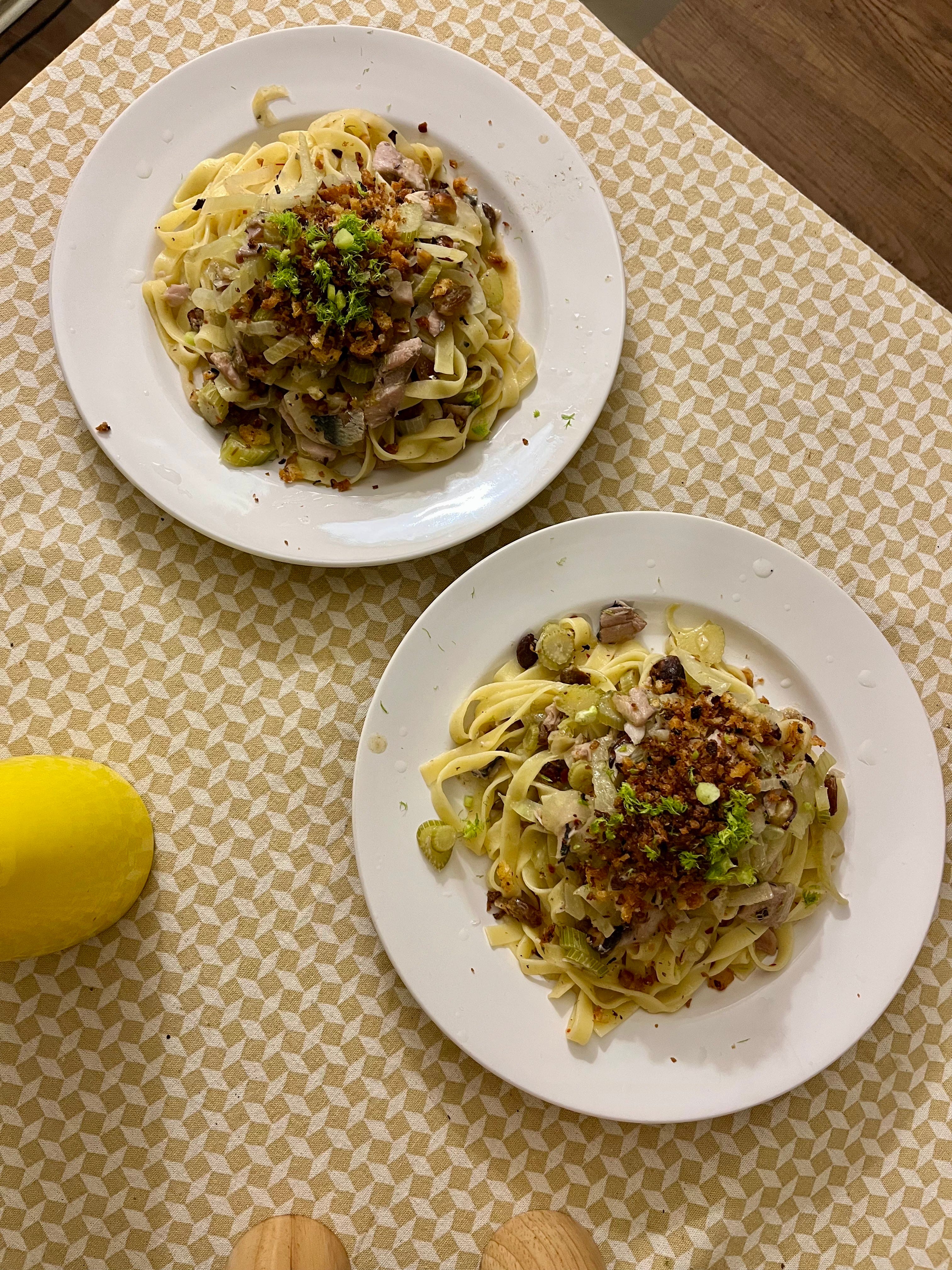
The pasta
Different versions of pasta con le sarde call for bucatini, ziti or percatelli - essentially any long hollow pasta - though these have never been my favourite. In my eyes, you can’t beat linguine, spaghetti or tagliatelle. Buying the bronze-cut version for a pound or two more makes all the difference in a recipe like this which benefits from that extra starchy pasta water to bring the sauce together.
All the other bits
While the Great Italian Chefs recipe doesn’t explicitly call for it, blooming the saffron and soaking the raisins in white wine plumps the raisins up deliciously and draws out the aromas and colours of the saffron. It also feels luxurious and means I can write about the saffron ‘blooming’ which is a lovely image and seems apt at this time of year. The saffron will give the finished dish a lovely golden tint, and its subtle sweetness adds a warmth that you might associate with paella.
On a side note, if you’re not the type who usually likes raisins in savoury dishes, trust them here. Maybe just use slightly fewer than the recipe calls for.
As for the fennel, if you’re lucky enough to get your hands on the fresh Sicilian kind, you probably don’t need extra fennel seeds, but I threw a few in after bashing them up in a pestle and mortar to emphasise that fennel flavour which I love. These go in at the start with the anchovies, fennel and onions.
For the fish, I got the fresh pre-filleted kind from Market Street (iykyk) which are great value and just need to be chopped into three or four pieces and thrown in for a minute or so before you add the pasta. The bones left in the fillets are so small that they disintegrate as they cook, but don’t overestimate the cooking time as you want the fish to retain some bite. If you’re using tinned, stir it through at the end just long enough for it to get piping hot.
In my eyes, making a quick pangritata is a non-negotiable. The crispy breadcrumbs add a lovely texture and you can pimp them up with whatever you want depending on the dish - chillies, lemon zest, dried oregano, anchovies. While it’s sometimes referred to as ‘poor man’s Parmesan’, I’d make a case for it being a better garnish for this dish (and many others).
Triumph or tribulation?
Triumph. One of the reasons why I love this recipe is because of how different it is to the other fishy pastas on a regular rotation in my kitchen. Though there’s possibly no meal more comforting than a puttanesca, tuna pasta or - if I’m feeling fancy - crab linguine, they tend to follow a similar flavour profile (think chillies, parsley, garlic and lemon). But pasta con le sarde feels adventurous while being just as simple to make - one for the summer months (hopefully) just around the corner.
I write this while lounging in the sun overlooking Kilifi creek in Kenya so next week’s newsletter may be a little delayed. You can expect a recipe inspired by my travels when it does come …